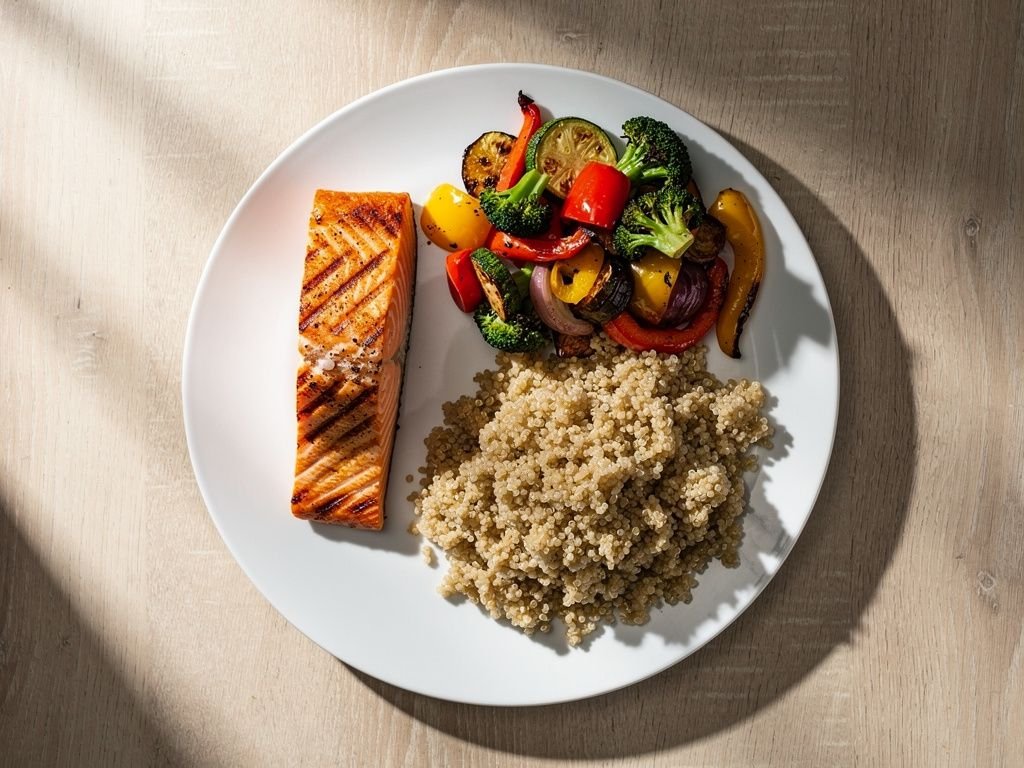
Macronutrients get treated like a moral scoreboard, carbs bad some years, fat bad other years, protein always good, when they are really just the three sources of energy and building material your body runs on. Understanding what each one actually does removes most of the anxiety around eating them.
Protein's job is building and repairing tissue: muscle, skin, hair, enzymes, and the antibodies your immune system uses. It is made of amino acids, nine of which your body cannot produce and must get from food. Most adults need roughly 0.36 grams per pound of body weight just to avoid deficiency, around 54 grams for a 150-pound person, but people who exercise regularly, are over 50, or are trying to build or preserve muscle typically do better around 0.6 to 0.8 grams per pound, closer to 90 to 120 grams for that same person. Protein is also the most satiating macronutrient gram for gram, which is why a protein-forward breakfast reliably reduces snacking later in the day more than a carb-heavy one does.
Carbohydrates are your body's preferred and most efficient fuel source, broken down into glucose that powers your brain, muscles, and every cell in between. The distinction that actually matters is not carbs versus no carbs, it is fiber content and processing level. A cup of cooked lentils and a can of soda are both carbohydrates, but the lentils carry 15 grams of fiber and protein alongside their carbs, digesting slowly and steadily, while the soda is pure fast sugar with nothing to slow it down. Whole grains, legumes, fruit, and starchy vegetables should make up the bulk of your carbohydrate intake; refined grains and added sugars should be the minority, not the norm.
Fat is essential for hormone production, absorbing vitamins A, D, E, and K, and building cell membranes, and it is also the most calorie-dense macronutrient at 9 calories per gram versus 4 for protein and carbs. The meaningful distinction within fat is the type: unsaturated fats from olive oil, nuts, seeds, and fish support heart health, while excess saturated fat, common in fatty meats and butter, is linked to higher LDL cholesterol when it dominates the diet. Aiming for fat to make up roughly 25 to 35 percent of daily calories, weighted toward unsaturated sources, covers most people's needs without requiring a scale.
Here is the part worth internalizing: you do not need to track grams to eat a reasonably balanced diet. A simple visual method works for most people most of the time: fill a quarter of your plate with a protein source, a quarter with a carbohydrate source (ideally whole grain or starchy vegetable), and half with non-starchy vegetables, then add a thumb-sized portion of fat like olive oil, avocado, or nuts. This rough ratio lands close to standard nutritional guidelines without a single number being counted.
Macro tracking has real uses for athletes, people managing specific medical conditions, or anyone in a structured phase of body composition change, and in those cases it is a genuinely useful tool. But for most people pursuing general health, the plate method delivers roughly the same outcome with a fraction of the mental overhead, and it is far easier to sustain for years rather than weeks.

You do not need forty gadgets to cook healthy meals well. Here are the dozen tools that actually get used every week.

Most snacks fail because they are all carbs and no staying power. Here is the combination that actually works.

Produce bought in season is cheaper, fresher, and often more nutritious. Here is what to actually look for each time of year.
 Make Healthy