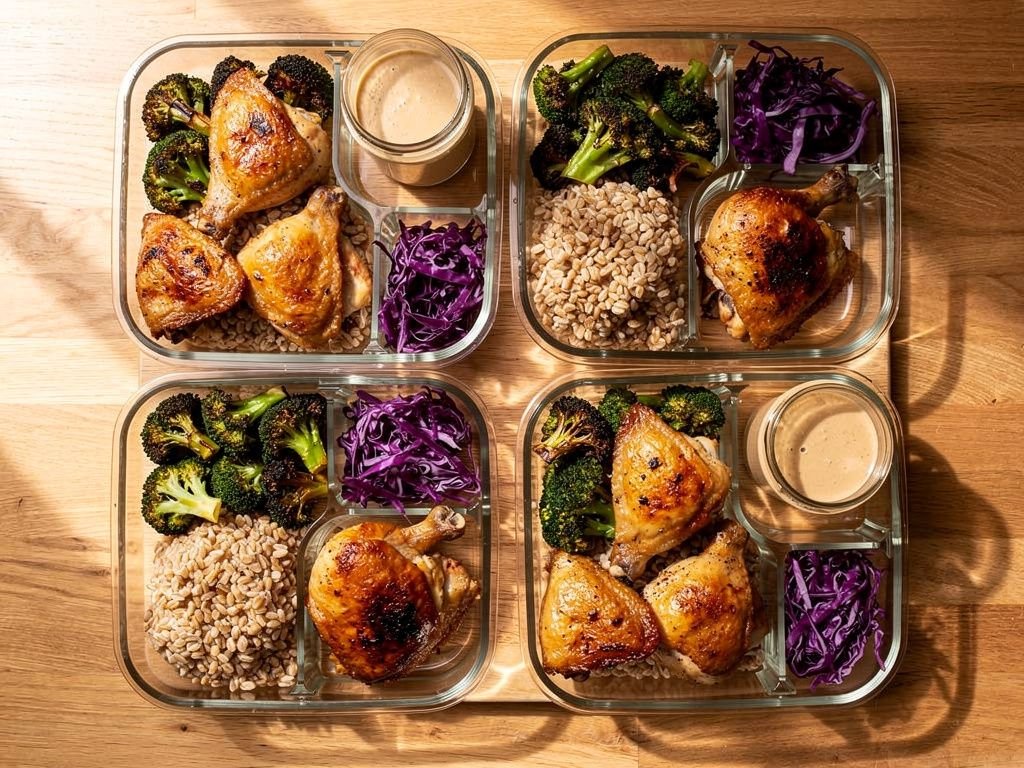
The reason most meal prep plans collapse by the second week is not lack of willpower. It is that they are designed like a factory line instead of a real kitchen. You do not need seven identical lunches in matching containers. You need a system that survives a bad Tuesday.
Start with components, not meals. Instead of cooking five finished dishes on Sunday, cook building blocks: one grain, one protein, one roasted vegetable, one raw vegetable, and one sauce. A batch of farro, a tray of roasted chicken thighs, a tray of roasted broccoli and carrots, a bag of shredded cabbage, and a jar of tahini-lemon dressing can become six different meals depending on how you combine them. This matters because eating the exact same bowl five days running is what actually kills most people's motivation, not the cooking itself.
Cook the protein in two ways, not one. Bake half your chicken thighs plain with salt and pepper, and toss the other half in a spice rub or marinade before roasting. Same cooking time, same tray, two flavor profiles. This one move doubles your variety without adding real effort.
Build in a 20-minute Wednesday touch-up. Sunday prep food starts tasting tired by midweek because the textures soften and the flavors flatten. Set aside 20 minutes on Wednesday to make a fresh element: toast some nuts, chop a quick herb salad, or fry an egg to put on top of Sunday's grain bowl. That small refresh is often the difference between finishing your prepped food and ordering takeout on day four.
Prep produce that needs it, skip produce that does not. Wash and chop kale, carrots, and cabbage ahead of time because they hold up for five to seven days. Leave avocados, tomatoes, and soft herbs for the day you eat them; prepping those early just means throwing out mush by Thursday. A good rule: if a vegetable is still sold whole and hard at the store, it can usually wait to be cut until the day you use it, unless you specifically need the time savings.
Use the freezer as a release valve, not a landfill. Cook double batches of soups, chilis, and grain-based casseroles, and freeze half in flat, labeled bags immediately, dated with a marker. A flat bag thaws in 20 minutes under warm water versus hours for a frozen block in a round container. The habit that actually saves people from Tuesday-night drive-thru runs is having three of these bags ready at all times, not having a perfectly stocked fridge on Monday.
Plan for one no-cook night on purpose. Buy a rotisserie chicken, a bag of pre-washed greens, canned beans, and good bread on your prep shopping trip and set them aside as your safety net meal. Building the failure night into the plan on purpose, instead of treating it as a failure of the plan, is what keeps people doing this for months instead of two weeks.
Finally, prep in 60- to 90-minute sessions, not marathon four-hour cook-offs. Two shorter sessions a week, say Sunday and Wednesday, produce fresher food and are far easier to actually start than one long session that keeps getting pushed to 'next weekend.' The best meal prep system is the one you repeat, not the one that looks best on the first try.
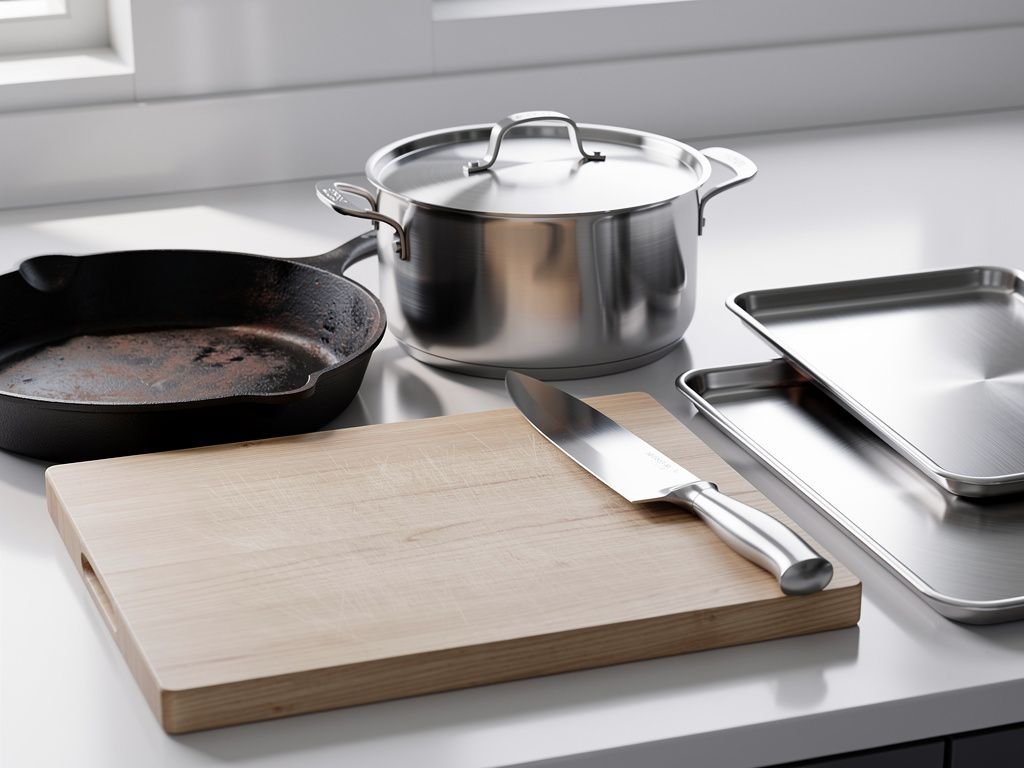
You do not need forty gadgets to cook healthy meals well. Here are the dozen tools that actually get used every week.
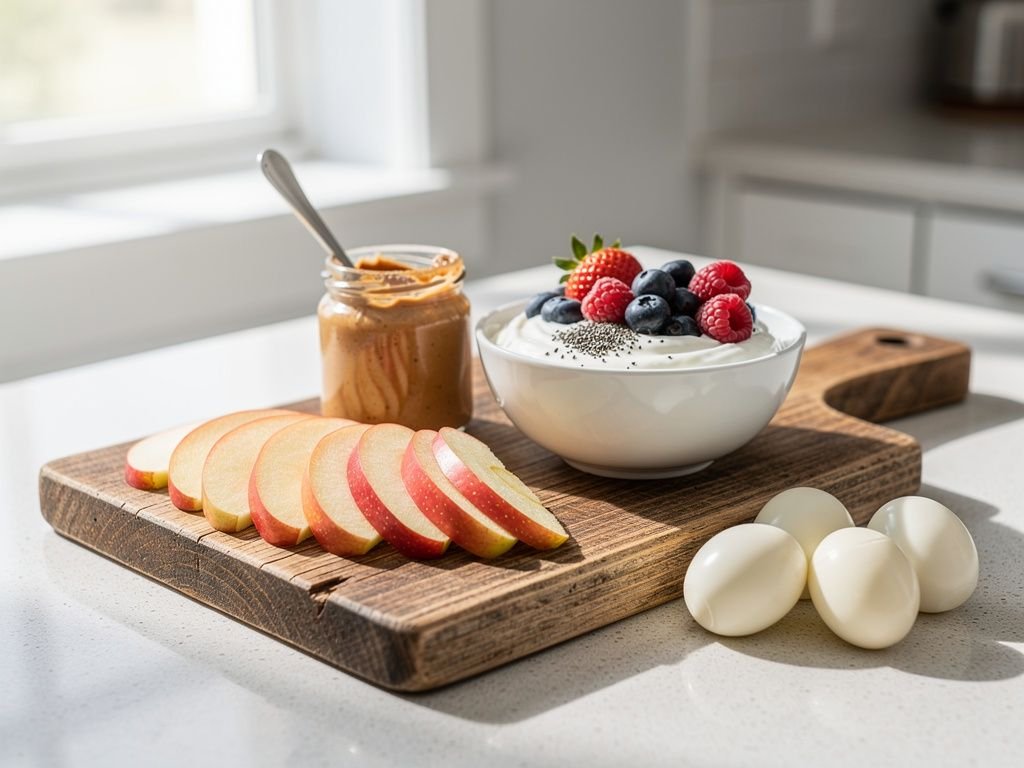
Most snacks fail because they are all carbs and no staying power. Here is the combination that actually works.
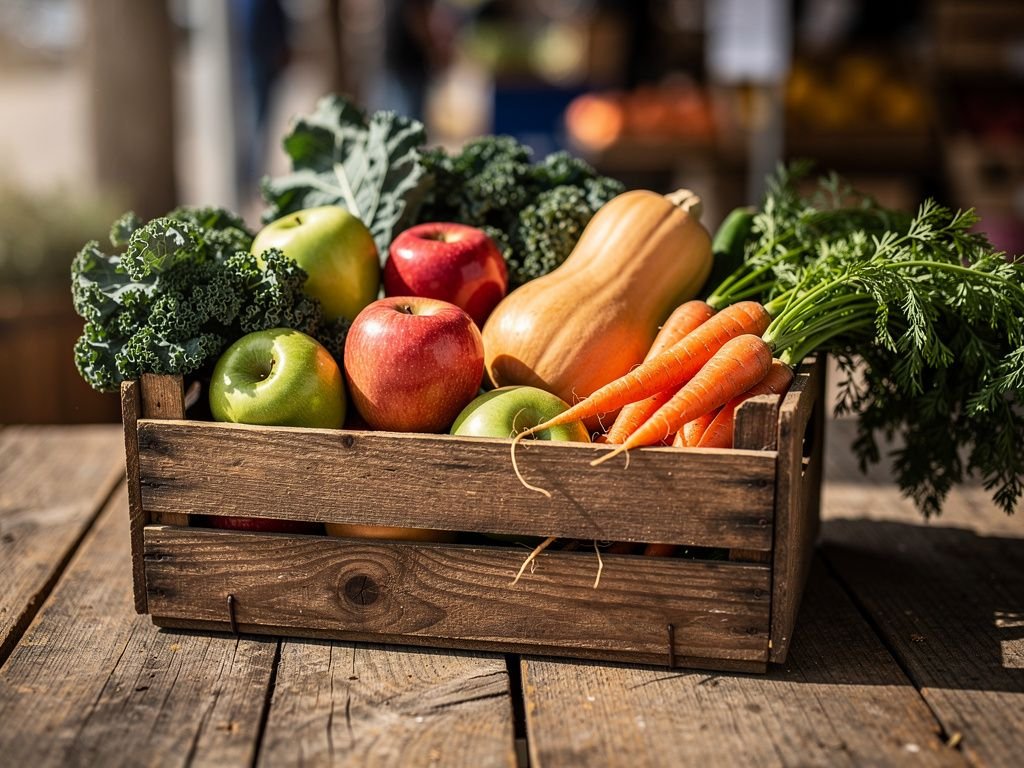
Produce bought in season is cheaper, fresher, and often more nutritious. Here is what to actually look for each time of year.
 Make Healthy